The Art of Scott Johnston
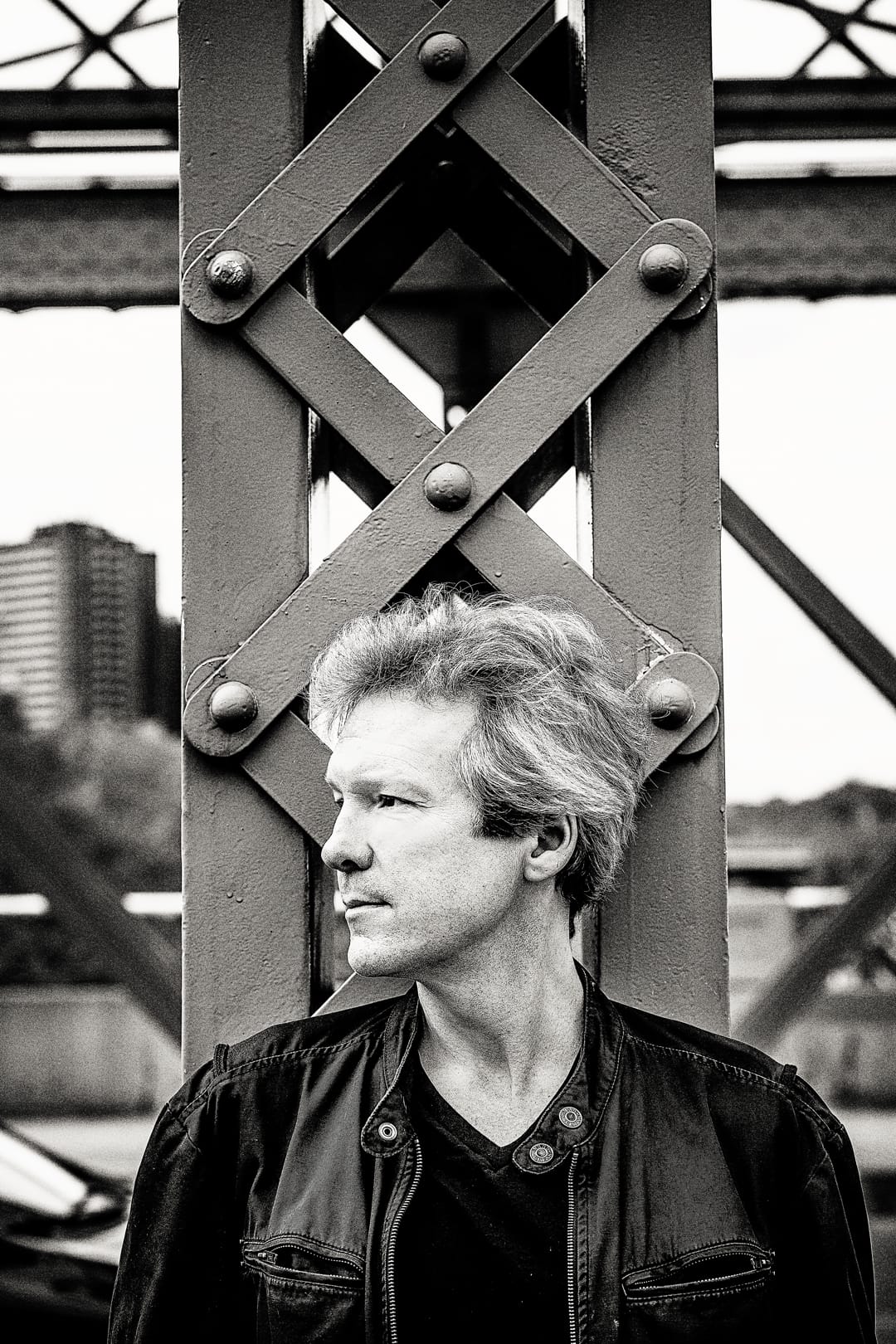
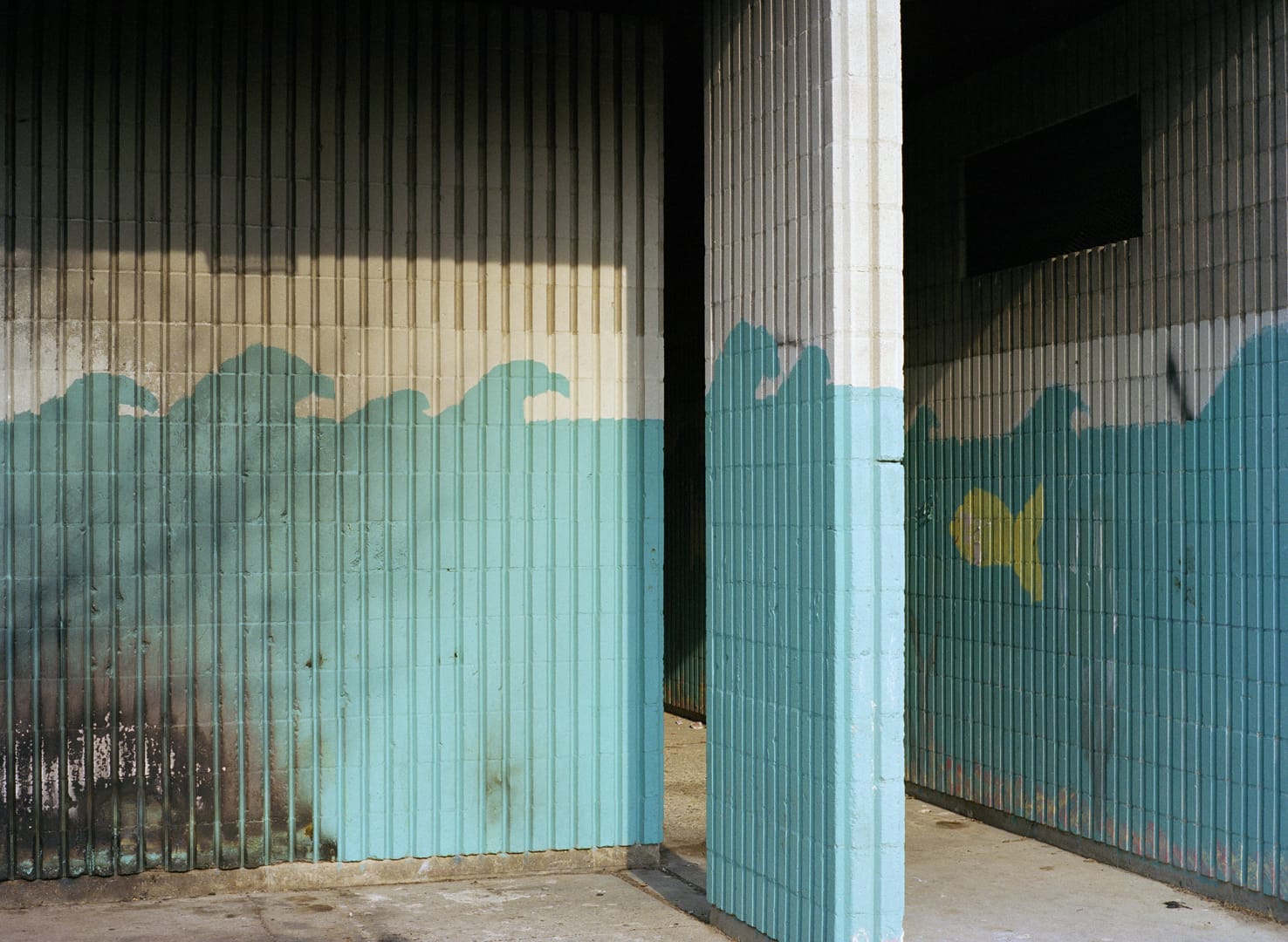
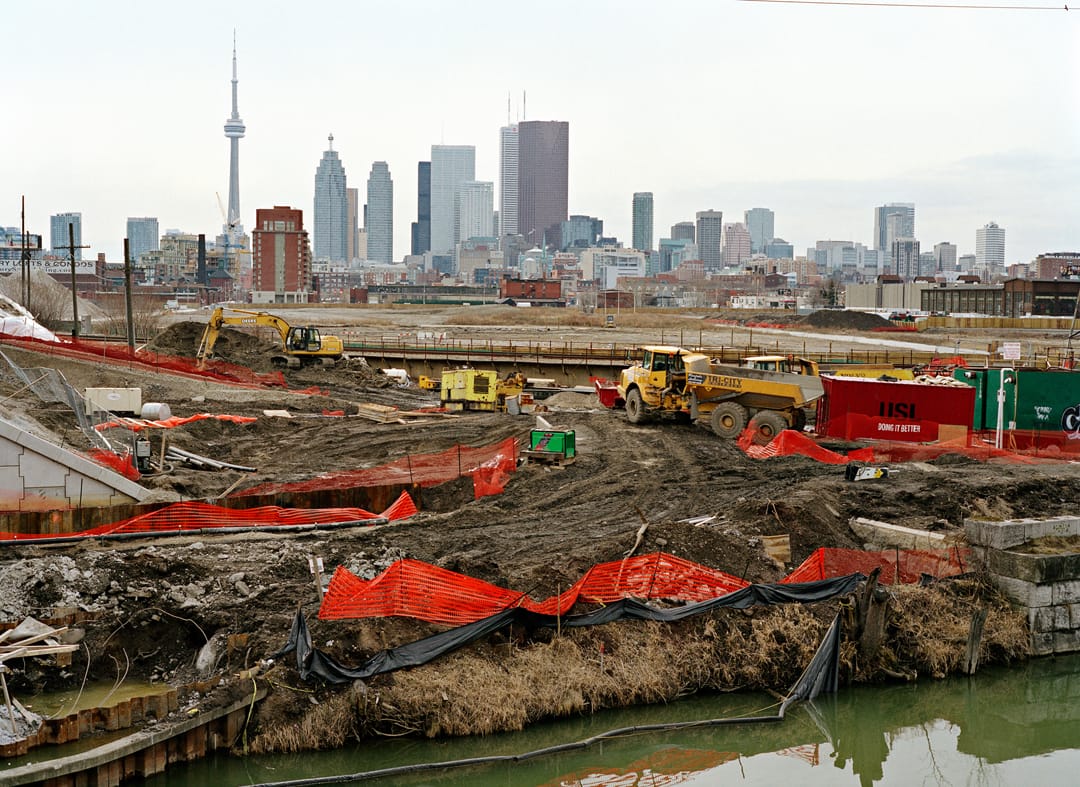
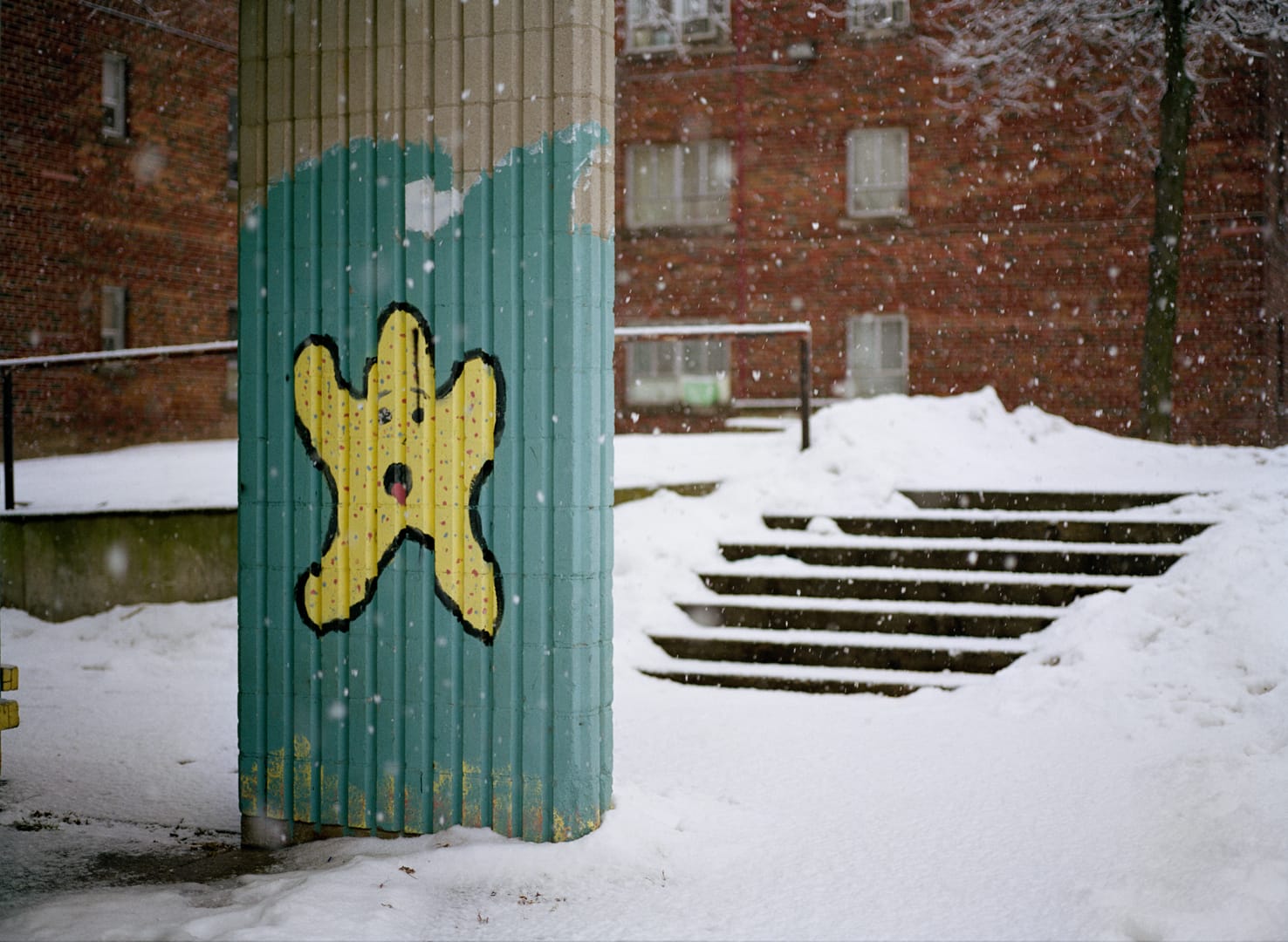
Scott Johnston, born in 1966 in Toronto Canada seems to be interested in pointing his camera at places most people wouldn’t find immediately interesting, things that are easily overlooked. “There just seems to be a bigger reward in discovering the things that aren’t immediately obvious.” The physical structures all around us contribute to our thought process; you cannot escape the fact that our thinking is directly influenced by the physical world.
The photographer dissects the physical world in order to communicate an idea or thought. Therefore, bringing into question the very nature of the documentary photograph–while Johnston does document, he also creates–is objective photography possible? There is always choice in what to show and what not to show. What’s the truth? What’s a lie? Every story is told from a particular point of view. In the end, it could be that there is more being said about the person taking the image than about the image itself.
Margaret Baxter
Endless Circles
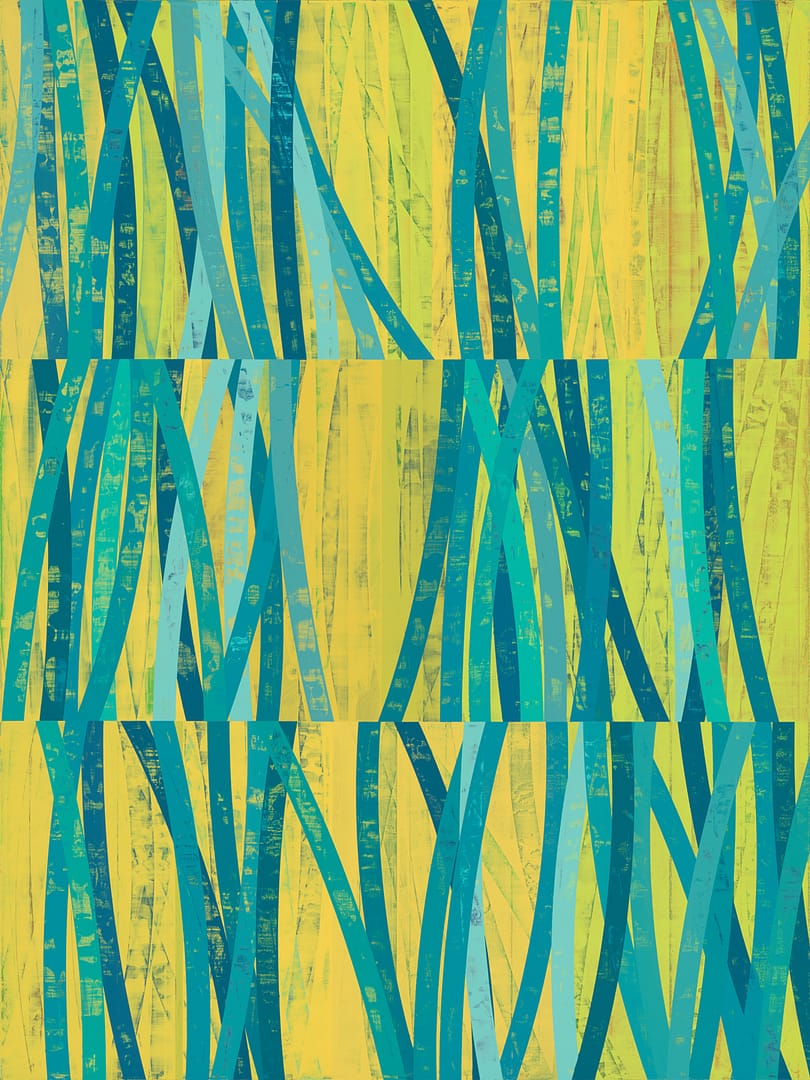
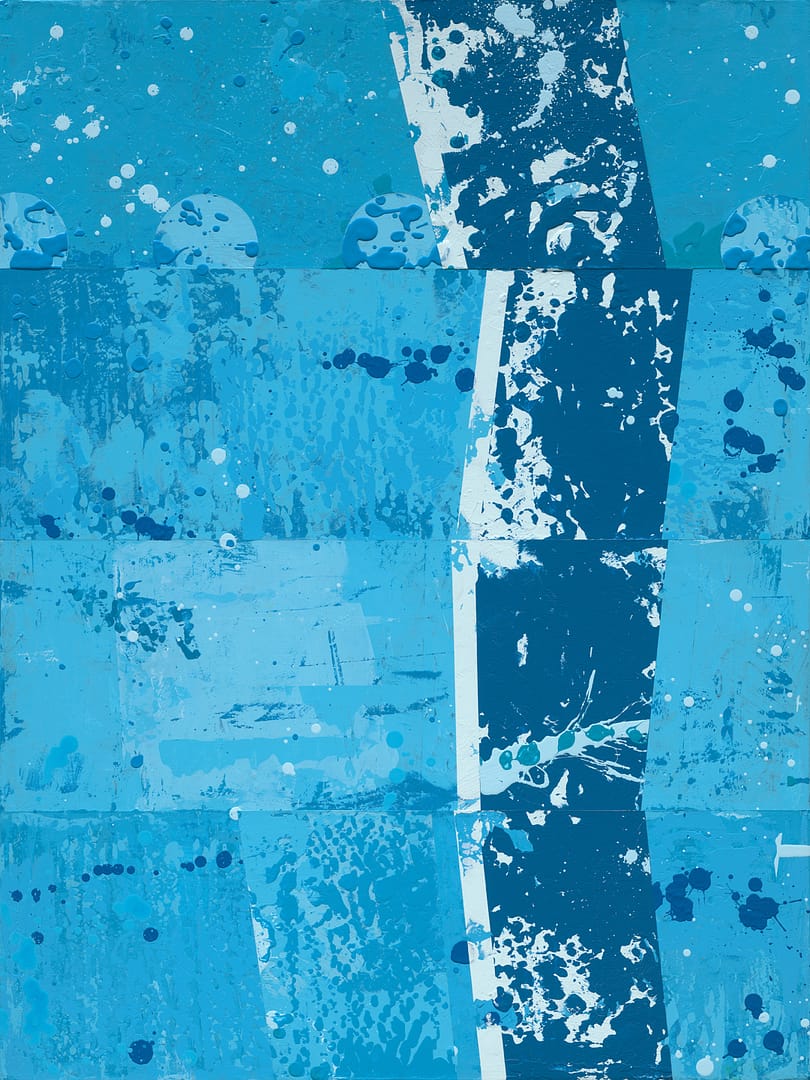
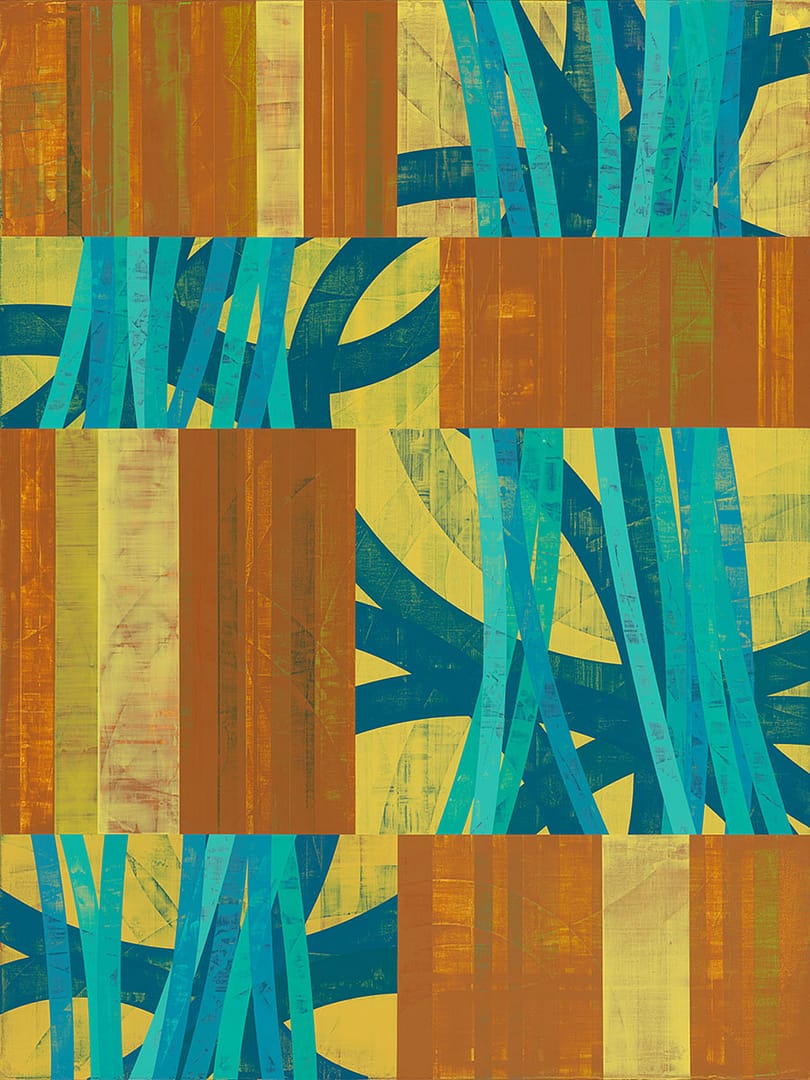
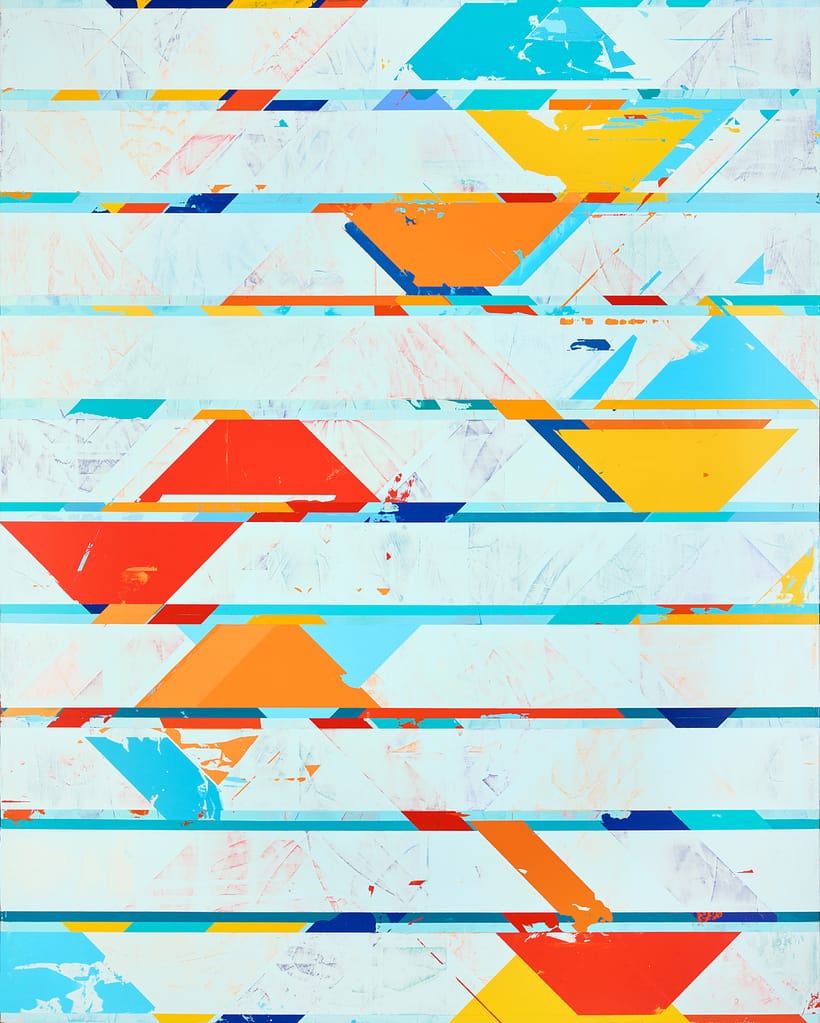
Toronto artist Scott Johnston has been concentrating his focus on his new body of work. His stated interest was to create a complex and rigorous visual language, separate and distinct from others. As the work progressed, he learned that there was not much information to be gained from outside of the work; that the work itself was the best source of how to proceed, each painting informing the next.
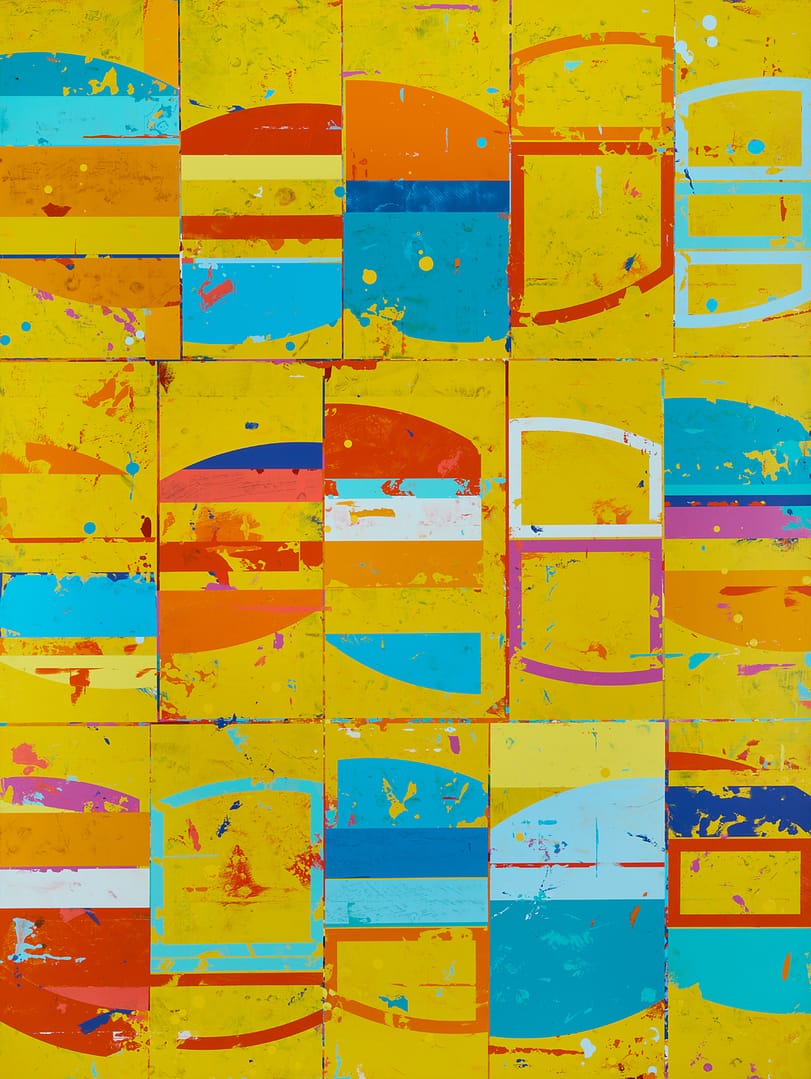
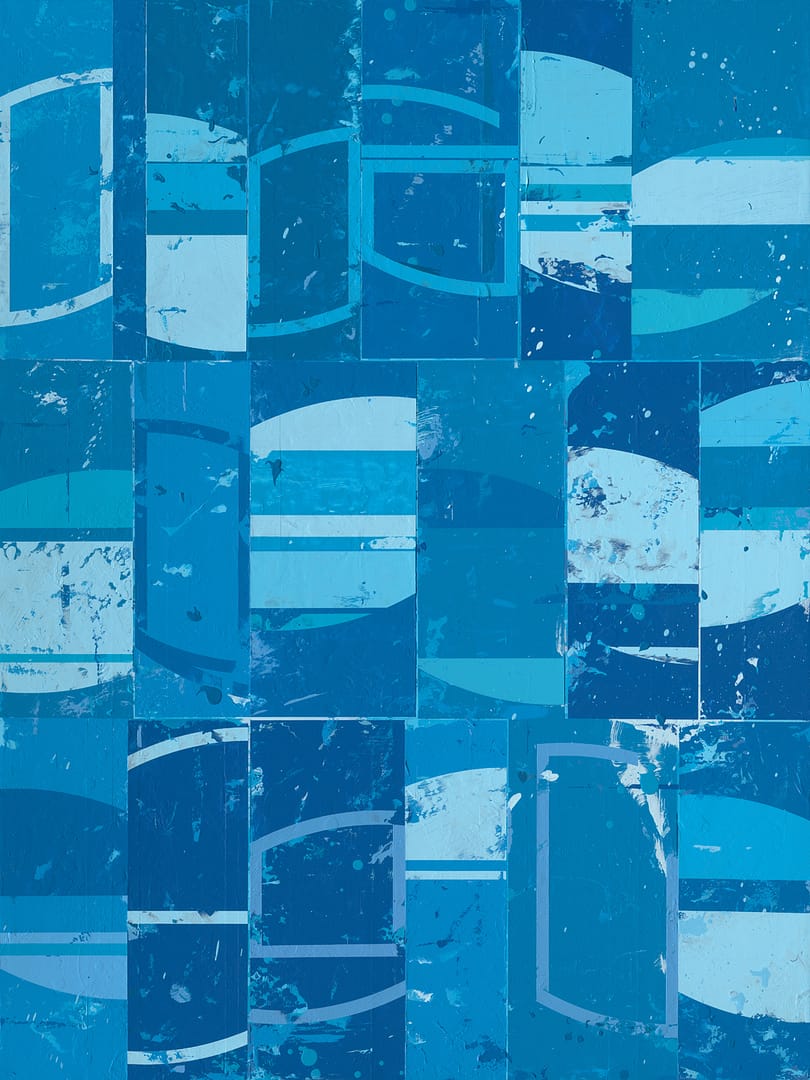
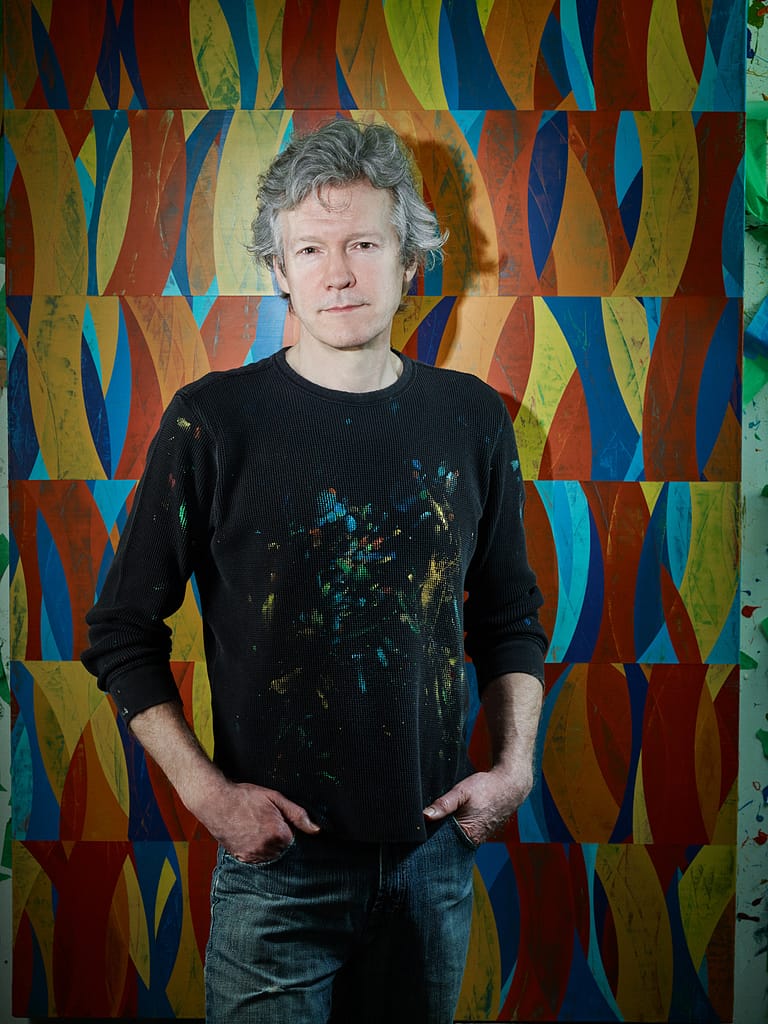
The paintings are mainly made up of the interplay of various coloured circles overlapping one another on an iridescent patchwork of coloured squares. The geometrically opposed shapes work together to create separate but, at the same time, integrated fluid visual movement.
The circles continually merge and divide from one other, never actually forming a complete circle, holding the viewer’s attention in a perpetual weave with no beginning and no end. Layering the fragmented circles with a combination of warm and cool colours further conveys a sense of depth. Foreground and background continually trade roles, sustaining and driving this undulating rhythmic pulse.
The mind’s eye tends to complete the incomplete, reflecting a desire to fill in the blanks. Johnston’s latest paintings—with their dual presence of echoing squares and broken circles that seem to extrapolate past the edges of these large-scale works—keep that desire active and challenge our ability to see the work in its entirety.
We often have similar experiences within our daily existence, words left unsaid, something left behind or a piece missing from the puzzle—just that one thing, whatever it may be, that would make everything complete. And, of course, for better or worse, we never really find it. Scott Johnston seems to understand and reflect this concept completely.
Margaret Baxter
The Art of Scott Johnston
Scott Johnston, born in 1966 in Toronto Canada seems to be interested in pointing his camera at places most people wouldn’t find immediately interesting, things that are easily overlooked. “There just seems to be a bigger reward in discovering the things that aren’t immediately obvious.” The physical structures all around us contribute to our thought process; you cannot escape the fact that our thinking is directly influenced by the physical world.
The photographer dissects the physical world in order to communicate an idea or thought. Therefore, bringing into question the very nature of the documentary photograph–while Johnston does document, he also creates–is objective photography possible? There is always choice in what to show and what not to show. What’s the truth? What’s a lie? Every story is told from a particular point of view. In the end, it could be that there is more being said about the person taking the image than about the image itself.
Margaret Baxter
Endless Circles
Toronto artist Scott Johnston has been concentrating his focus on his new body of work. His stated interest was to create a complex and rigorous visual language, separate and distinct from others. As the work progressed, he learned that there was not much information to be gained from outside of the work; that the work itself was the best source of how to proceed, each painting informing the next.
The paintings are mainly made up of the interplay of various coloured circles overlapping one another on an iridescent patchwork of coloured squares. The geometrically opposed shapes work together to create separate but, at the same time, integrated fluid visual movement.
The circles continually merge and divide from one other, never actually forming a complete circle, holding the viewer’s attention in a perpetual weave with no beginning and no end. Layering the fragmented circles with a combination of warm and cool colours further conveys a sense of depth. Foreground and background continually trade roles, sustaining and driving this undulating rhythmic pulse.
The mind’s eye tends to complete the incomplete, reflecting a desire to fill in the blanks. Johnston’s latest paintings—with their dual presence of echoing squares and broken circles that seem to extrapolate past the edges of these large-scale works—keep that desire active and challenge our ability to see the work in its entirety.
We often have similar experiences within our daily existence, words left unsaid, something left behind or a piece missing from the puzzle—just that one thing, whatever it may be, that would make everything complete. And, of course, for better or worse, we never really find it. Scott Johnston seems to understand and reflect this concept completely.
Margaret Baxter